Running a small business in Canada is rewarding, but let’s be honest, it is also overwhelming. You are the salesperson, the customer service rep, the operations manager, and somehow, the bookkeeper too. Most owners push their finances aside until April arrives, and suddenly everything feels urgent, expensive, and stressful.
The truth is that staying tax-ready throughout the year is completely achievable without a full-time accountant. You just need a simple system, the right habits, and tools that do the heavy lifting for you.
What Does “Tax-Ready” Actually Mean?
Tax-ready does not mean your taxes are already filed. It means your financial records are clean, organized, and current enough that filing would be straightforward at any point during the year. No digging through shoeboxes of receipts. No reconstructing three months of expenses from memory. No panicked calls to your accountant the week before the CRA deadline.
For Canadian small business owners, this matters more than most people realize. Between GST/HST remittances, quarterly installments, potential CRA audits, and year-end reporting, disorganized books are not just stressful; they are genuinely costly. Late filings trigger penalties. Missed deductions leave money on the table. Poorly tracked mileage and expenses mean you pay more tax than you legally owe.
Getting tax-ready is not about doing more work. It is about doing the right work consistently, so nothing piles up.
The Monthly Habits That Actually Keep You Organized
Most small business owners fall behind because they treat bookkeeping as a once-a-year event instead of a monthly routine. Here is what a healthy monthly rhythm looks like:
Categorize every expense as it happens. Do not let transactions sit uncategorized for weeks. Whether it is a software subscription, a fuel receipt, or a client lunch, log it immediately with the correct category. This takes minutes when done regularly and hours when left for later.
Issue and track all invoices. Every invoice you send should have a clear status, sent, viewed, paid, or overdue. If you are managing this in a spreadsheet or worse, from memory, you are setting yourself up for missed payments and cash flow gaps.
Record your mileage. If you use a vehicle for business, every kilometer is a potential deduction. Canadian tax law allows you to deduct the business-use portion of your vehicle expenses, but only if you have records to back it up. A mileage log is not optional, it is your evidence.
Review your payables. Be aware of your debts and their due dates. Staying on top of payables protects your credit relationships with suppliers and prevents late fees from eating into your margins.
Reconcile your numbers. At the end of every month, make sure your records match your bank statements. Catching a discrepancy in the same month it happens takes five minutes. Catching it six months later takes an afternoon.
What the CRA Actually Wants to See
If you are ever audited, the CRA is looking for documentation that supports every deduction you claimed. That means receipts, invoices, contracts, mileage logs, and bank records, all organized and accessible.
The businesses that sail through audits are not the ones with the most complicated accounting systems. They are the ones with clean, consistent records that tell a clear story. One transaction at a time, one month at a time.
Keeping digital records is not just convenient, it is smart. Paper receipts fade, get lost, and take up space. A digital record attached to the correct expense category is searchable, permanent, and audit-proof.
The Tool That Brings It All Together – Quad Force
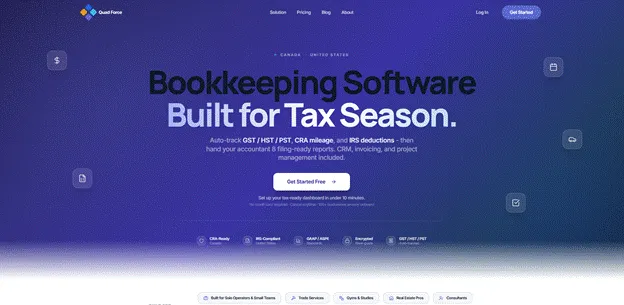
This is where the right software makes an enormous difference. Most small business owners either overpay for enterprise tools they do not need or piece together five different apps that never quite talk to each other.
Quad Force was built specifically for small business owners who need a complete system without the complexity. It combines invoicing, expense tracking, mileage logging, payables, scheduling, CRM, and tax-ready reporting into one clean platform. No jumping between apps. No data falling through the cracks.
What makes Quad Force different is that it is designed around how small businesses actually operate—not how accountants wish they did. Every feature connects to the bigger picture so that when tax season arrives, your records are already organized, your reports are ready, and handing off to your accountant takes minutes instead of days.
If you are tired of feeling behind on your finances, you can try Quad Force free at quadforce.io and see how much simpler staying organized can be.
A Simple Year-Round Checklist
Bookmark this and come back to it every month:
● Log and categorize all expenses
● Issue invoices promptly and follow up on overdue ones
● Record every business kilometer driven
● Review and track all outstanding payables
● Reconcile bank records against your books
● Set aside your GST/HST remittance amount
● Back up or confirm your digital records are synced
If you want to go deeper on what tax ready bookkeeping looks like in practice, visit Quad Force’s blog and see a guide on what tax ready bookkeeping actually means, which breaks it down step by step.
The Bottom Line
There is no need for tax season to be a disaster. For Canadian small business owners, the difference between a stressful April and a smooth one comes down to what you do in January, June, and October. Small consistent habits, backed by the right tools, add up to financial clarity that protects your business and keeps more money in your pocket.
Start the habit this month. Your future self will thank you.